
Golf's Data Era: From Strokes Gained to the Ball Rollback, a New Way of Reading the Game
गोल्फ में स्ट्रोक्स गेन्ड एक ऐसा मेट्रिक है जो हर शॉट की तुलना उसी दूरी और लाई से टूर-औसत बेसलाइन से करता है, जिससे यह पता चलता है कि किसी खिलाड़ी ने किस विभाग में स्ट्रोक जीते और कहाँ गँवाए। इसे चार श्रेणियों में बाँटा जाता है — ऑफ द टी, अप्रोच, अराउंड द ग्रीन और पुटिंग — और डेटा पीजीए टूर के शॉटलिंक सिस्टम से आता है। इसके अलावा ओडब्ल्यूजीआर मेजर में प्रवेश तय करता है, पीजीए टूर–एलआईवी–पीआईएफ विवाद ने रैंकिंग मान्यता को प्रभावित किया है, और बॉल रोलबैक गेंद की उड़ान-दूरी को सीमित करने वाला नियामकीय बदलाव है। ध्यान रखें: कोई भी स्ट्रोक्स गेन्ड निष्कर्ष नमूने के आकार, अवधि और स्रोत के संदर्भ के बिना अधूरा है।
Professional golf has passed through a quiet revolution over the past two decades, and it happened on servers rather than on fairways. Almost every shot played on tour is now recorded — where the ball started, how far it travelled, from which lie, and where the next shot was played from. Mapped against a tour-average baseline, that data produces a far clearer picture than any traditional scorecard. The central instrument of this shift is Strokes Gained.
Strokes Gained: moving the question from 'how many' to 'where'
Conventional statistics tell you how many strokes a player took across four rounds. Strokes Gained asks where the value of those strokes was created and where it was lost. The underlying idea is simple: for every distance and every lie, the average number of strokes a tour player needs to complete the hole is established first. When a player then plays from that position, the outcome is compared against that average. Better than average means positive Strokes Gained; worse than average means negative.
The biggest advantage of the method is that it strips out the noise of scoring. A player can shoot 68 and still have performed below average if the putts fell from long range; another can shoot 72 and have played superbly if approach shots repeatedly finished near the pin but the putts did not drop. A scorecard does not distinguish between those two rounds. Strokes Gained does.
The framework was systematised by Mark Broadie, whose research at Columbia Business School applied it to tour-level data and changed the understanding of where winning actually comes from in golf.
Four categories, four different stories
Strokes Gained is generally split into four parts: off the tee (the effect of driver distance and accuracy), approach (shots played into the green), around the green (chipping, pitching, bunker play), and putting.
The split matters because every player's strengths and weaknesses can be placed in one of those four boxes. A player can be outstanding off the tee and below average around the green; another can lead the tour in putting while being mid-table in approach. Before shot-level data existed, there was no reliable way to see those gaps, because every shot dissolved into a single score.
ShotLink and the credibility of data
The spine of this analysis is shot tracking. The PGA Tour's ShotLink system records the location of every shot, and Strokes Gained is calculated from it. Whenever a player's performance is debated, the first question should be which source the number came from. Official tour statistics, ShotLink data and independent analytics platforms do not carry equal weight. An informal remark and an official shot-level dataset should never be weighed on the same scale.
That distinction matters for readers too. When a report claims a player is the best approach player on tour, the first question should be: over what period, across how many shots, and from which source?
Why approach Strokes Gained is the most decisive
If one of the four categories had to be chosen as most strongly correlated with scoring, it would be approach. The reason is direct: the shot into the green determines how far the putt will be from. A player who repeatedly finishes near the pin creates birdie chances automatically, even with average putting. Conversely, a player who hits it a long way off the tee but is not solid on approach will not convert that distance into score.
This is why the match between course setup and player profile — course fit — is settled largely around approach play. Long, soft, slow greens reward high, spinning shots; firm, fast, small greens reward lower, controlled trajectories.
The limits of traditional metrics
Greens in Regulation — the share of holes where the green is reached in the regulation number of strokes — was treated for decades as the measure of precision. But GIR only records whether the green was hit, not where on the green the ball finished. Two feet from the pin or fifty feet away, both count as a GIR. Strokes Gained fills exactly that gap.
Fairways hit is an equally incomplete measure. One player can post a high fairway percentage through conservative strategy while another takes an aggressive line and gains more strokes despite a lower percentage. Driving distance on its own says little unless you know from which lie and with what accuracy it was achieved.
The tee shot: balancing distance and accuracy
The biggest contribution of modern analysis is that it made the old distance-versus-accuracy trade-off measurable. It was long assumed that a longer hitter necessarily pays in accuracy. Shot-level data shows that the price is not always equal — the cost of playing from the rough is, in many cases, smaller than the benefit of the extra distance. That insight has influenced course design and tournament setup as well. But context is still required: change the grass length, the density of the rough or the wind direction and the arithmetic changes with it.

Around the green: what scrambling really means
Strokes saved after a missed green are called scrambling. The traditional scrambling percentage records how often par was saved after a green was missed, but it does not measure the difficulty of the situation — a chip from just off the edge and an escape from a deep bunker are counted the same. Strokes Gained again gives a more precise picture by accounting for lie and distance.
Putting and the small-sample trap
Putting is the most volatile part of Strokes Gained. Week-to-week swings are large, and those swings generate the most confusion. When a player holes a run of long putts in one tournament, the story the following week becomes that his putting has changed. Often it is simply noise in a small sample.
Professional analysis demands the discipline of asking, before any conclusion, how large the sample is. Four rounds can indicate a direction, not a trend. Putting stability generally only shows over a long period, and even then only to a limited degree. Reports that extrapolate a single week of putting data linearly into a forecast should be read with caution.
Course fit: links and parkland
The character of a course has a direct effect on outcomes. Links courses — built on sandy ground beside the sea, with firm fairways and heavy wind exposure — are an entirely different examination of the game. Hitting the ball high into the air is risky there, and running the ball along the ground is more effective. Parkland courses, by contrast, with dense trees and softer greens, reward high, spinning shots.
Course fit is therefore a relative judgement, not an absolute one. It emerges from the match between a player's profile and a course's characteristics. Calling a player weak in the wind only means something if you specify the course, the wind speed and the shot type involved.
The major cycle and the world ranking
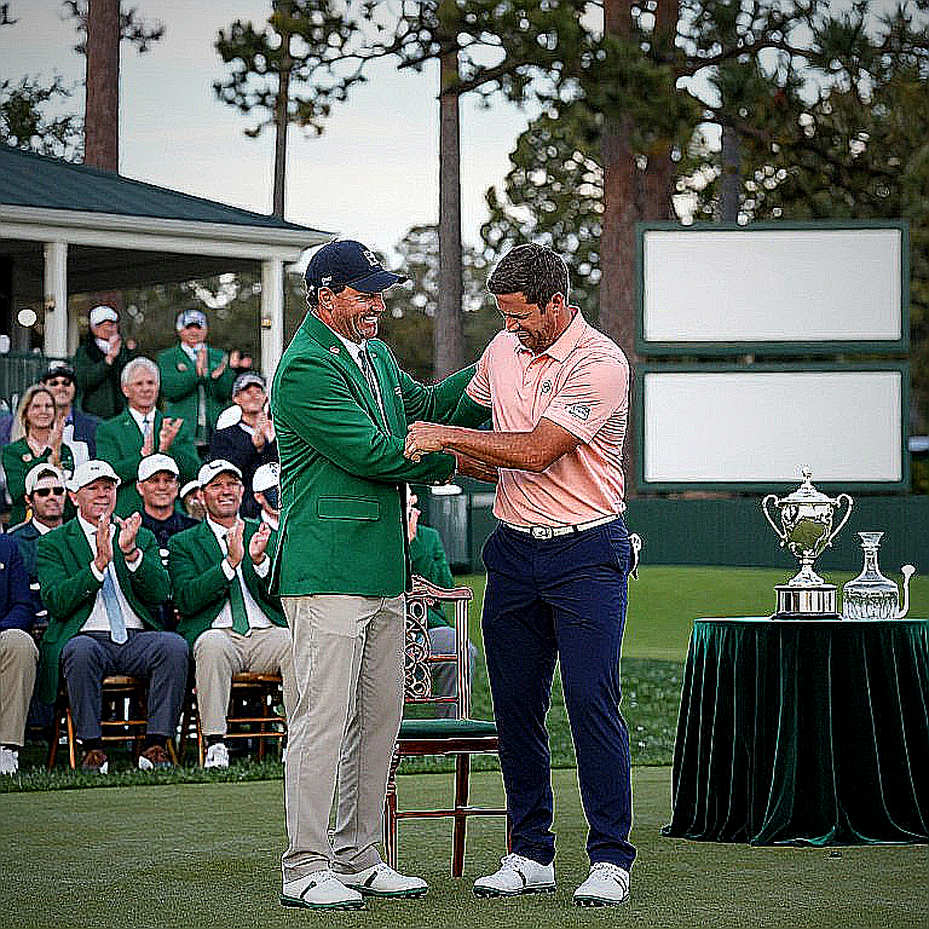
The professional calendar revolves around four major championships: the Masters at Augusta National in April, followed by the PGA Championship, the U.S. Open, and The Open in July, which is played on its own rota of links courses. Their significance lies not only in prize money but in their history, the severity of their setups, and the conditions required to get into them.
The central instrument of those conditions is the Official World Golf Ranking. It governs entry into the majors and elite events. How many ranking points an event carries depends on its strength — that is, how many strong players competed. Understanding an event's tier therefore requires three things: the strength of the field, the ranking points on offer, and its prestige.
The cut line and the tour card
One hard reality of tour golf is the cut line. Typically, only the top 65 and ties after 36 holes advance. Missing the cut means no prize money and no ranking points. At the end of a season, those small margins decide whose tour card survives and who returns to a lower tier.
That is why any performance must be assessed in the context of where it falls in the season. The week immediately before a major, the playoff race, and the quiet post-season period give the same score three different meanings.
PGA Tour, LIV and PIF: the structural rift
In recent years the biggest story in golf has been in the boardroom rather than on the course. LIV Golf, backed by Saudi Arabia's Public Investment Fund, challenged the established tour structure with a 54-hole, team-based format and large purses. An open conflict over players followed between the PGA Tour and LIV, and in 2026 a framework agreement was announced between the PGA Tour, the DP World Tour and PIF.
The dispute affected not only player movement but the ranking system. The OWGR declined to recognise LIV events, which in practice made the traditional route to the majors harder for players competing there. This is an issue in which sport, capital and control are entangled, and any conclusion about it requires checking the date and the source first.
The ball rollback and equipment rules
Debate over technical rules in golf has never stopped. The most discussed initiative of recent years is the ball rollback — announced by the USGA and the R&A, tightening test standards in order to limit how far the ball flies. According to the announcement, the change is scheduled to take effect for elite competitions before the end of the decade and at recreational level afterwards.
Its significance lies in the fact that it will touch professional and amateur golf differently. At professional level, even a modest reduction in distance can change course setup, shot selection and strategy; at amateur level the question is how practical the change will be. On equipment rules, the discipline of tying every claim to the regulator's official text is essential, because rumour spreads quickly in this area and corrects slowly.
FedExCup and Race to Dubai
Both major tours run season-long points systems: the PGA Tour's FedExCup and the DP World Tour's Race to Dubai. Both aim to bind a season's performance into a single order and then decide a winner through playoffs. Their strength is that they smooth out the volatility of a single tournament; their limitation is that they rest on the same score-based logic whose limits are described above.
Team events: Ryder Cup and Presidents Cup
Golf's two biggest team events demand a different kind of analysis. Selection processes, pairings and formats (foursomes, fourball, singles) shape the outcome as much as individual form. A player's team record therefore should not be weighed as equivalent to his individual record.
Sunday pressure and the mental side
One aspect of golf always sits outside the data: the pressure of the final round. Protecting a lead on Sunday is a distinct skill, and it is hard to measure. Historically some players have been better than others at closing, but the sample is so small that presenting it as a statistical finding would be misleading. The same rule applies here: keep narrative and data separate.

Injury, age and the performance curve
Golf's relationship between performance and age is not linear. Attributes such as distance begin to decline from the mid-thirties, while accuracy and course management grow in importance. The back, wrist and knee are among the most common injury sites in the game, and a single injury often affects the whole swing chain. Any assessment of form should account for where a player sits on the age curve and whether an injury report exists.
Conclusion: data and context are both required
Golf's data era has changed the way the game is understood, but it has also added a responsibility. Tools like Strokes Gained only mean something when accompanied by context: which course, which period, how large a sample, which source. Data alone does not tell a story; it provides the frame, and filling that frame remains the work of context.
In a sport where a single shot can change the outcome of four days, conclusions drawn in haste are the biggest risk. The most reliable account is the one that states what the data says — and is equally clear about what the data cannot say.