
होमWorld CricketFakhar Zaman's 127 and Saad Baig's 74 Seal Tri-Series for Pakistan, But the Top-Order Stutter Leaves a Bigger Question
Fakhar Zaman's 127 and Saad Baig's 74 Seal Tri-Series for Pakistan, But the Top-Order Stutter Leaves a Bigger Question
लाहौर में पाकिस्तान ने श्रीलंका को हराकर त्रिकोणीय वनडे सीरीज़ जीती। फखर ज़मान ने 99 गेंदों पर 127 रन बनाए — 11 चौके, 6 छक्के, 128.3 स्ट्राइक रेट, यह उनका 12वां वनडे शतक रहा। साद बैग ने 75 गेंदों पर 74 रन की पारी खेली, जो उनका पहला वनडे अर्धशतक था। लेकिन टॉप ऑर्डर लड़खड़ाया — माज़ सदाक़त 5 और बाबर आज़म शून्य पर आउट हुए। 36.5 ओवर में स्कोर 230/5 था और दोनों सेट बल्लेबाज़ आउट हो चुके थे। मैच का लक्ष्य, जीत का अंतर और शेष गेंदें उपलब्ध विवरण में नहीं हैं, इसलिए पीछा करने की कठिनाई का सटीक आकलन संभव नहीं। मुख्य निष्कर्ष: जीत एक शानदार पारी और एक संयमित अर्धशतक से बनी, संतुलित बल्लेबाज़ी से नहीं।
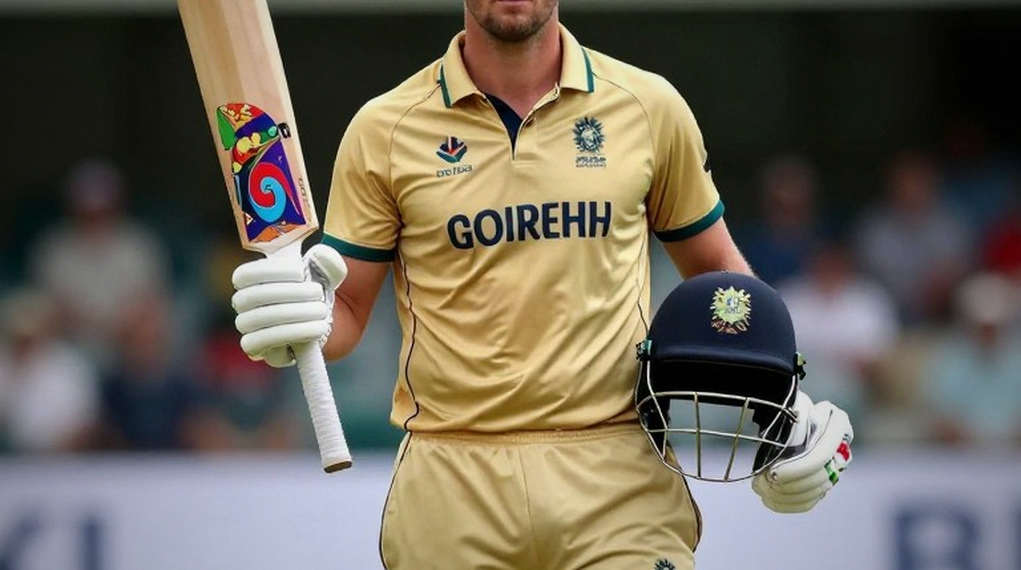
Lahore: Pakistan have clinched the tri-nation ODI series on home soil with a win over Sri Lanka, and the face of that triumph is opener Fakhar Zaman, who struck 127 off 99 balls. It was the 12th ODI century of his career. His innings contained 11 fours and six sixes, meaning 80 of his 127 runs came in boundaries — 63 per cent of his total. A strike rate of 128.3 in an innings where the team was rebuilding after early wickets tells its own story.
The match began badly for Pakistan. Maaz Sadaqat departed for 5 and Babar Azam fell for a duck, which meant two of the top three contributed five runs between them. The team was under pressure once again. In the middle of that pressure, Fakhar Zaman held one end and, alongside Saad Baig, put the innings back on its feet. That partnership was what dragged Pakistan back into the contest and pushed the score towards what the report described as a daunting total.
Fakhar's intent was clear from the start — he was in no mood to block. Seventeen boundary hits in 99 balls works out to roughly one boundary every six deliveries. That shows he maintained an aggressive approach throughout, not just in the closing overs. When the strike rate sits around 128 while the partner bats at a normal tempo, it is obvious that the entire weight of the innings rested on one batter.
One more number is worth examining. Of Fakhar's 127, eighty came in fours and sixes. Off the remaining 82 balls he made about 47, which is roughly 0.57 runs per ball on non-boundary deliveries. In cricket terms this is a boundary-or-dot profile. In a chase with a demanding required rate, that approach is highly effective because it keeps the rate under control. It is equally risky, though: on a slower surface, or against bowlers who take pace off, the floor of that same approach drops sharply.
Saad Baig's innings is the more informative one. Seventy-four off 75 balls is roughly a run a ball (strike rate 98.7). A young batter producing that kind of knock under the pressure of falling wickets says something about temperament. It was his maiden ODI fifty, and it came in a situation where the team had lost a wicket at 5 and another at 0. With a partner scoring at 128 at the other end, Baig's role was clear — hold an end and do not waste deliveries. That is the classic second-fiddle template.
But the questions start here. Does this win demonstrate the strength of Pakistan's batting, or does it demonstrate a rescue act? Look at the scorecard: Pakistan were 230/5 after 36.5 overs, with 13.1 overs still remaining in a 50-over game. By that stage both set batters — Fakhar and Saad Baig — had already been dismissed. That left the final thirteen overs to a middle order about which the available detail says very little. Without knowing the target, the margin of victory or the balls remaining, calling this chase either comfortable or tight would be wrong.
It is also worth noting that the headline and the body of the report do not match. The headline asserts that the series was clinched, while the available detail stops at 230/5. This is common on cricket websites — a live report is given a new headline after the result, while the mid-innings text is never updated. The consequence is that a reader absorbs the claim of victory without understanding how it was achieved, or how narrowly. That is not just an editorial shortcoming; analytically it is a serious gap.
The real concern is the structure of the batting order. A host team that gets five runs from its top three needed a century at a strike rate of 128 and a maiden fifty from a newcomer to win. That points to dependency on one batter, not to a balanced unit. Had Fakhar made 40 that day instead of 127, it is not hard to imagine where the team would have ended up. The report also claimed that Pakistan's batting delivered on all fronts, while the same report's numbers show two of the top three making five runs between them. That framing is result-driven, not process-driven, and it should not be carried into any serious assessment.
One clarification on Babar Azam's duck: a single zero is not a form verdict. It is the textbook small-sample trap, in which every poor innings gets labelled a slump. The same caution applies to Saad Baig's 74 — a fifty at home, in one innings, against bowling of unknown quality, is a promising data point, not a verified trend. His real test will come away from home and against a quality spin attack.
Playing in Lahore is a major context in itself. Home crowd, familiar pitch and favourable conditions all work in the host team's favour. Every data point from this match should be read in that light, and none of it should be merged with away ODI splits, because doing so would flatter Pakistani batters beyond what the evidence supports.
Another significant gap is that the available detail contains no reference to Pakistan's bowling, no part of Sri Lanka's innings, no toss result, and no mention of weather or Duckworth-Lewis. Despite a win of this size, it is impossible to say what the bowlers did, who built pressure and who took wickets. Batting-centric, one-sided reporting is an old ailment of cricket coverage, and this case is no exception.
One genuine positive is the hosting angle. Pakistan staged a multi-nation tournament at home and won it. From an administrative standpoint that is a bigger achievement than the trophy, because home international cricket is what unlocks broadcast rights, ticketing and sponsorship revenue. Giving two relatively inexperienced players an ODI opportunity is also a step in that direction — a long-horizon investment in giving the pipeline international exposure.
Reading this win as evidence that the batting is settled would be premature. The things to watch are clear: how Pakistan's top three aggregate across the next five ODIs; how Saad Baig fares away from home and against good spin; how Fakhar's boundary dependence holds up on slower pitches; and when Pakistan's bowling unit actually bails out the batting. Until those answers arrive, this is the story of one outstanding innings and one composed fifty — not a guarantee about an entire batting unit.
In short, the trophy is real, Fakhar's 12th century is real, and Saad Baig's maiden fifty is real. But when a team's top three collapse for five runs, treating the win as proof of structural strength is dangerous. That is the most important lesson of this match.

संबंधित खिलाड़ी
अनुशंसित
Australia's Second Test: 99 Runs, a Neck Brace, and Six Wickets on Travis Head's Shoulders2026-10-24
The Blank Sheet and the Full Confidence: Cricket Coverage's Oldest Lie2026-11-02
Empty Records, Full Market: Building a Reliability Filter for Cricket's Transfer Window2026-11-02
Fifteen Names, Two Roles: In Muscat, India U19's Real Question Is Bowling Balance, Not Captaincy2026-10-30
154/9 and 429: England's Two Defeats Share One Deficit — The Missing Wicket-Taker2026-10-28
अनुशंसित
Lancashire Let James Anderson Go: 50 Wickets and Captaincy Undone by a ‘Future Attack’ Plan2026-10-31
Robin Uthappa Named Mumbai Indians Batting Coach: The Four-Axis Backroom Plan and the Real Test on December 162026-10-30
Ninety-Nine at the Gabba: Jack Clayton's Unbeaten Night and Queensland's 105-Run Gap2026-11-02
अनुशंसित
Fakhar's 127 and Shaheen's All-Round Show: Pakistan Chase Down 326 with Three Wickets in Hand2026-11-01
Marufa Akter's Injury: One Anonymous Official, Four Weeks of Bed Rest, and No Return Date2026-11-02
Bhuvneshwar's Return, Christchurch Air and Vaibhav's Bench: The Real Scorecard of Selection Policy2026-10-30
Cricket's Calendar Crisis: More Matches, Less Recovery2026-11-01
अनुशंसित
Cricket's Double Calendar: The League Boom, the National-Team Squeeze, and the Test of Player Endurance2026-10-28
Newlands' Green Grass, an Empty Chair, and Cummins' Decision2026-10-28
Eight Matches, One Slot: In England's Australia Rights Deal, the Product Is Saturday Morning, Not the Cricket2026-10-28
Hagley Oval's 48/0: New Zealand's Powerplay and India's Incomplete Spin Plan2026-10-30
Test Hundreds From No.9 Or Below: The Number Is Rare, The Definition Is Weak2026-10-25