
Fakhar's 127 and Shaheen's All-Round Show: Pakistan Chase Down 326 with Three Wickets in Hand
पाकिस्तान ने त्रिकोणीय सीरीज़ में श्रीलंका के 326 रन के लक्ष्य को तीन विकेट शेष रहते हासिल किया। फखर जमान ने 127 रन बनाए (52 गेंदों में अर्धशतक, 84 में शतक), लेकिन उन्हें 6, 69 और 106 रन पर तीन जीवनदान मिले, जिनमें दो बार महीश तीक्षणा ने कैच छोड़ा। सआद बैग ने अपने 20वें जन्मदिन से कुछ घंटे पहले 74 रन बनाए — पहला अंतरराष्ट्रीय अर्धशतक। मिनहास और मोहम्मद नवाज़ की 94 रन की साझेदारी निर्णायक रही, और लक्ष्य से दो रन दूर मिनहास व फहीम के आउट होने के बाद शाहीन आफ़रीदी ने छक्के से मुक़ाबला ख़त्म किया। शाहीन ने कमिंडु मेंडिस (131) और शनाका को भी आउट किया, जबकि हारिस रउफ़ ने अंतिम ओवरों में दो विकेट लिए। श्रीलंका ने 41 ओवर में 255/2 से 325/8 तक का सफ़र तय किया — अंतिम नौ ओवरों में छह विकेट गँवाए। पाकिस्तान की शुरुआत 14/2 रही, जिसमें बाबर आज़म शून्य पर आउट हुए। ध्यान देने योग्य बात: चार दिन पहले पाकिस्तान 110 रन पर ढेर हुआ था, और तीसरी टीम का नाम उपलब्ध रिपोर्ट में कभी नहीं लिया गया। यह जीत एकल नायक की नहीं, बल्कि फखर, सआद बैग, मिनहास-नवाज़ और शाहीन के संयुक्त योगदान की है।
Pakistan chased down Sri Lanka's 326 with three wickets in hand in this tri-series fixture, and the win belongs to no single player. Fakhar Zaman's 127, Saad Baig's 74 on the eve of his 20th birthday, a 94-run stand between Minhas and Mohammad Nawaz, Shaheen Afridi's contributions with both ball and bat, and Haris Rauf's two late wickets — all of it combined to shape the result. Yet the headline points at one man, and that distance between headline and reality is the most interesting story of the match.
Sri Lanka's innings: 255/2 after 41 overs, then six wickets in the last nine
Sri Lanka batted first and reached 255 for the loss of only two wickets in 41 overs. At that rate, a target around 350 looked inevitable. Kamindu Mendis made 131 — his highest ODI score, more than double his previous career-best. Pavan Rathnayake made 77 and shared a long partnership with Kamindu. Rathnayake's series tally stood at 427 runs, though that figure rests on just four dismissals, so the average carries limited statistical weight and should be read with caution.
But Sri Lanka lost six wickets in the final nine overs to finish on 325/8. That was the phase in which the match turned. A total that had looked headed past 350 became a target of 326 for Pakistan — difficult, but not impossible.
Pakistan's start: 14/2 and a shortage of belief
Pakistan's innings began badly. Maaz was the first man out for just one. Then came Babar Azam — the batter expected to play the big innings in a chase like this. Instead he fell second, for a duck, extending a run of nine innings without a half-century. At 14/2 Pakistan were in trouble, and the tension on the field was plain to see.
That is when Saad Baig arrived at the crease. Playing hours before his 20th birthday, he made 74 — his maiden international half-century. The innings did more than move the scoreboard; it restored belief in the dressing room. Given his age and inexperience, it was among the least discussed but most necessary innings of the match.
Fakhar Zaman's century: 127 runs, but three lives
Fakhar Zaman made 127. He reached fifty off 52 balls and his hundred off 84, and that tempo tells the story of an innings that pulled Pakistan towards the target. But there is another side to it: Fakhar was dropped three times — on 6, on 69 and on 106. Two of those chances went down off Maheesh Theekshana. Had either been taken, the entire shape of the chase would have changed.
This is where the headline and the reality part ways. To say Fakhar's century 'denied' Sri Lanka is factually true but incomplete. Without those three reprieves, the century may never have existed. Fakhar was already out at 106 — before the target was reached.
The 94-run stand and the late squeeze
After Fakhar fell, Minhas and Mohammad Nawaz put on 94 together. The stand proved decisive, but it did not guarantee the win. The clearest evidence came when, needing just two more, Pakistan lost Minhas and Faheem in quick succession. The match was open again.
That is when Shaheen Afridi arrived and finished it with a single shot — a six over the boundary. A player who had already dismissed both Kamindu Mendis and Shanaka in this match now delivered the final blow with the bat. That all-round contribution is the least discussed link in the chain.
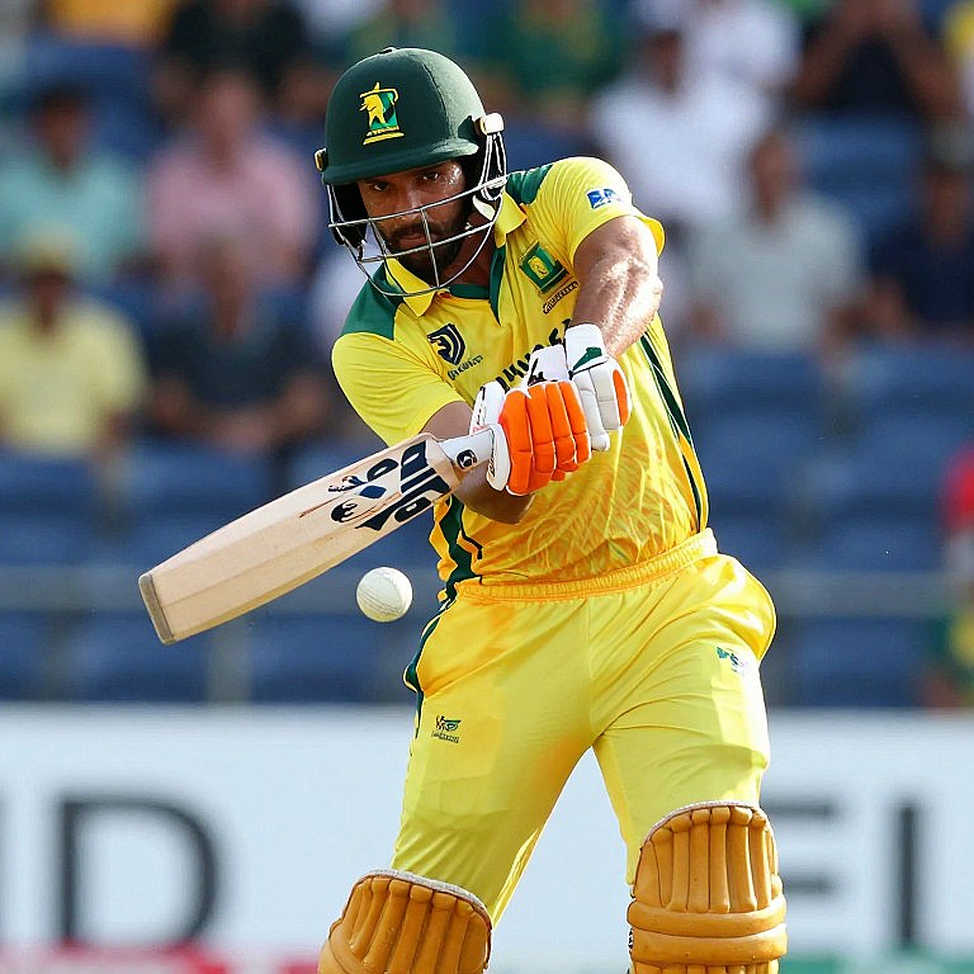
Shaheen and Haris: the bowling contribution
Shaheen Afridi was central with the ball too. He removed Kamindu Mendis — the man on 131 — and also accounted for Shanaka. Haris Rauf took two wickets late. What is clear is that Pakistan took six wickets in the last nine overs; that is the hardest piece of evidence behind the comeback narrative.
On the other side, Minhas's left-arm spin proved expensive, though no figures are available for it. The report gives no economy rates, no over counts and no bowling averages, which makes it difficult to judge how much of the win was won by the bowlers and how much by the batters.
The arithmetic: 46 needed from 30, and a 15-run over
The match swung fastest in the closing overs. At one stage Pakistan needed 46 from the last 30 balls — not easy, but not impossible. Then a single over went for 15, and the equation shifted again. The full sequence and what followed are not given in the available report, which makes it impossible to reconstruct exactly where the chase stalled and how it opened up.
Background and the questions nobody asked
There is a striking contradiction in the backdrop. Only four days earlier this same Pakistan side had been bowled out for 110. Now it was chasing 326. Why the change — pitch, tactics or mindset — is never addressed.
The same applies to a structural gap: this is a tri-series, and the third team is never named, even though that is basic context for the competition.

Does this win belong to one hero?
Fakhar's 127 is the biggest number, but he was out at 106. Saad Baig's 74 came in the crisis at 14/2. The 94-run stand between Minhas and Nawaz kept the target within reach. Shaheen contributed with both ball and bat. Read that way, the win is distributed, not individual. The distinction matters because a single-hero telling hides the work of the men who made the century possible.
Conclusion
Pakistan chased down 326 with three wickets in hand — a solid and genuinely thrilling win. But framed purely as the story of Fakhar Zaman's century, it obscures the real foundation: Saad Baig's 74, the Minhas-Nawaz stand, Shaheen's all-round effort and Haris Rauf's late wickets. And it is worth remembering that Fakhar was dropped three times — had any one of those catches stuck, this would have been a very different story.