
Asian Cricket: An Economic Superpower With Structural Fault Lines
एशियाई क्रिकेट वैश्विक क्रिकेट का सबसे बड़ा आर्थिक केंद्र है, जहाँ आईपीएल, पीएसएल, एलपीएल, बीपीएल और आईएलटी20 जैसी फ्रेंचाइजी लीगें राजस्व की मुख्य धारा बन चुकी हैं। इसके बावजूद क्षेत्र का शासन-तंत्र तीन संरचनात्मक दबावों से घिरा है: आईसीसी राजस्व वितरण में बिग थ्री (भारत, इंग्लैंड, ऑस्ट्रेलिया) का अनुपातहीन हिस्सा; भारत-पाकिस्तान के बीच 2012–13 के बाद से ठप द्विपक्षीय क्रिकेट और उससे जन्मा एशिया कप का हाइब्रिड मेज़बानी मॉडल; तथा लीग-केंद्रित आय के कारण उत्पन्न एनओसी विवाद और खिलाड़ी स्वायत्तता की माँग। विश्लेषणात्मक रूप से सबसे बड़ी चेतावनी यह है कि टेस्ट, वनडे और टी20 के आँकड़े व रैंकिंग कभी मिलाकर नहीं देखे जाने चाहिए, और जहाँ सत्यापन-योग्य तथ्य उपलब्ध न हों, वहाँ 'अपर्याप्त जानकारी' घोषित करना ही सही पद्धति है। यह सामग्री केवल खेल-सूचना हेतु है और सट्टेबाज़ी सलाह नहीं है।
Asian cricket currently stands between two contradictory truths. On one side, it has become the economic gravity centre of world cricket — the largest broadcast market, the biggest audience base, the most expensive franchise tournaments and the fastest-growing advertising economy all come from this region. On the other, the region's governance architecture remains trapped in a permanent triangle of revenue sharing, international calendar priorities, player league autonomy and geopolitical tension. No assessment of Asian cricket is complete without understanding this paradox, because here on-field performance and boardroom decisions cannot be examined in isolation. In Asia, cricket is not merely a sport; it is an economic machine that binds media rights, franchise valuations, political symbolism and youth aspiration into a single system.

League economy: five leagues, one market
The commercial spine of Asian cricket is built on franchise leagues — the Indian Premier League in India, PSL in Pakistan, LPL in Sri Lanka, BPL in Bangladesh, the Nepal Premier League in Nepal and ILT20 in the UAE. Among these, the IPL's scale is qualitatively different: its media rights for the 2026–27 cycle were settled at roughly ₹48,000 crore, making it the most valuable property in world cricket. The other Asian leagues are commercially smaller, but they do three distinct things — they provide domestic players with financial security, they shrink the calendar space available for international series, and they create a regional marketplace for talent. This is why, for every Asian board, a league is no longer an optional revenue stream but a primary one.
Yet this success carries a structural risk. When five or six leagues operate simultaneously in the same region and all of them want the same limited pool of top players, bidding pressure rises artificially and smaller leagues lose bargaining power. League valuations and player salaries then begin to be set by media narrative and agent hype rather than on-field output. This gap — commercial value versus sporting value — is the central analytical challenge in Asian cricket.
Revenue distribution: the politics of the Big Three
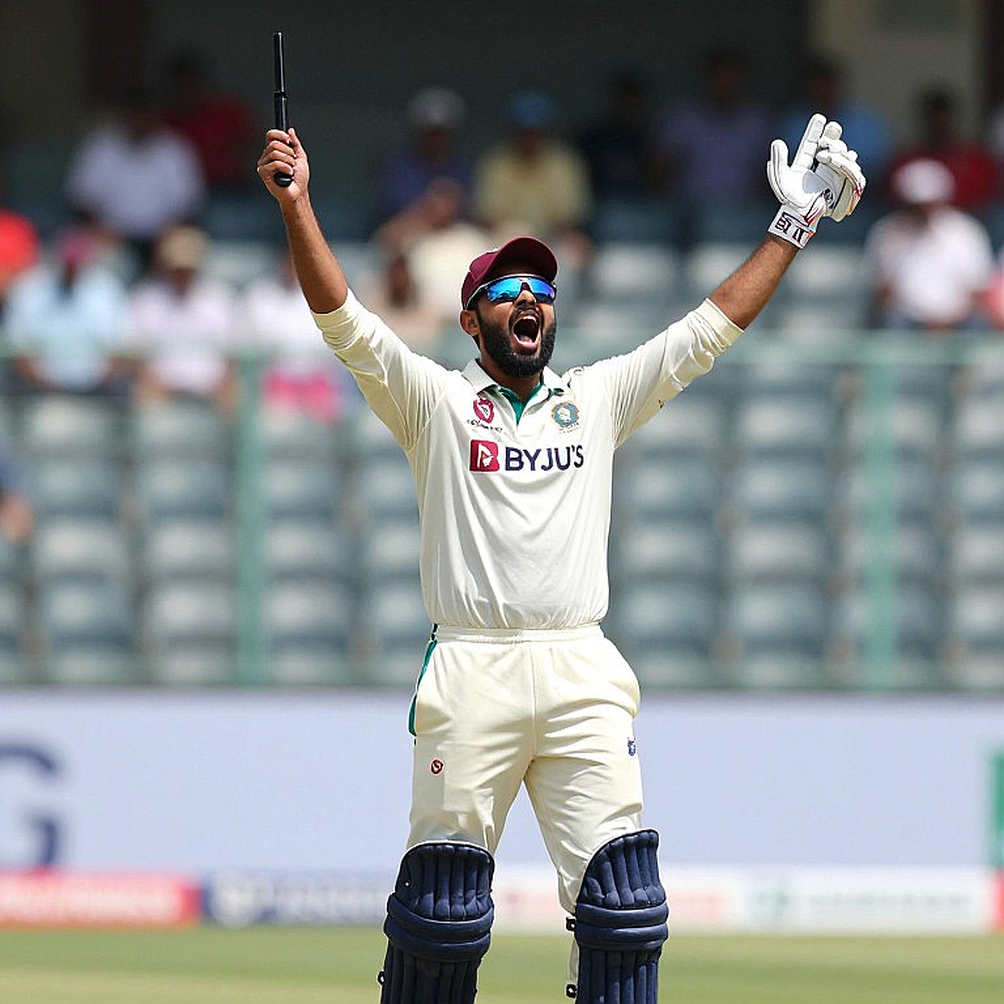
More important than the visible expansion of leagues is the revenue distribution framework inside the ICC. Since 2026, India, England and Australia — the so-called Big Three — have exercised disproportionate control over global cricket's income, and in the ICC's 2026–27 distribution model India's share remains the largest. The arrangement is rational, because the single largest slice of global broadcast revenue originates in the Indian market; and it is contested, because for smaller member nations this financial asymmetry is becoming permanent.
The seed of this is most visible within Asian cricket. When associate nations need money to run high-performance programmes while the same money is committed to the league-centred economy of the large boards, the depth of international competition naturally thins out. The Asia Cup and the ACC's emerging-teams competitions partially bridge this imbalance, but they cannot alter the revenue gap itself.
India–Pakistan and the Asia Cup hybrid arrangement
The most sensitive axis in Asian cricket is the India–Pakistan relationship. Since 2026–13 no full bilateral series has been played between the two countries; the teams now meet only in multilateral events — the Asia Cup and ICC tournaments. This has produced an odd economic paradox: the fixture is counted among the most-watched sporting contests in the world, yet its staging is among the least stable.
The 2026 Asia Cup produced a systemic answer to this instability — a hybrid model in which hosting rights and the actual venue of play became two separate things. The model was a fix for an immediate problem, but it set a precedent that the hosting of major Asian events will now be decided by diplomatic conditions rather than sporting ones. That factor is now permanently embedded in any future calendar analysis.
NOC and player autonomy
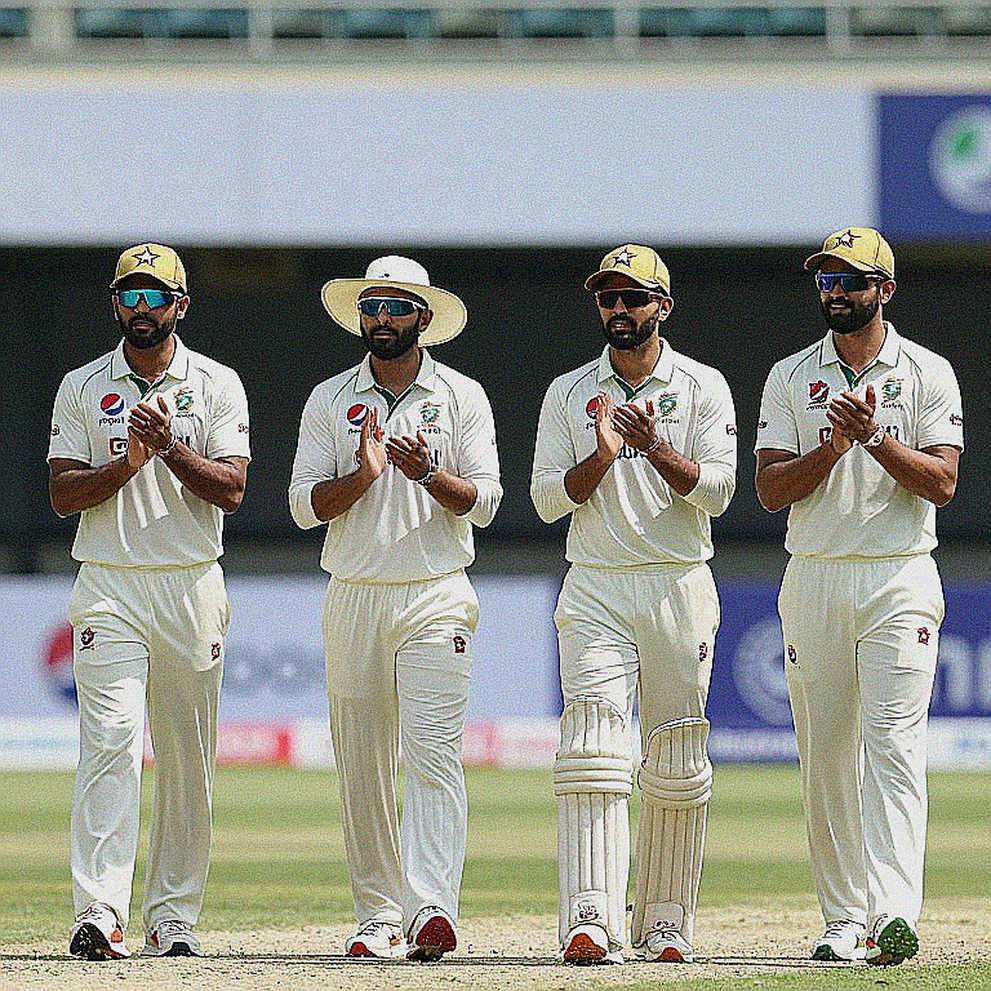
The sharpest administrative consequence of league expansion is the NOC (No Objection Certificate) system. National boards decide when and for how long a player may appear in a foreign league, and central contract terms are directly tied to that permission. In practice this has become a contest in which the board guards a constrained calendar while the player seeks to maximise a limited earning window.
This friction is not one country's problem but a structural issue across the region. When a player's entire annual income can be earned in a single league season, playing for the national team becomes an economic choice rather than an automatically accepted duty. Boards have responded by tightening central contracts, but tightening often surfaces as a lack of transparency — and that is precisely where administrative disputes, player-association demands and public narrative collide.
The talent supply chain
The least acknowledged strength of Asian cricket is its domestic structure. India's first-class and Under-19 machinery, Pakistan's long tradition of domestic restructuring, the age-group systems of Bangladesh and Sri Lanka, and the recent rise of Nepal, Oman and the UAE together form a regional talent pool. The problem is that this pool is uneven: talent density at the top end is very high while resources at the bottom end are very low. The result is that a large share of talent never extracts full value from its domestic system, and its development ends up dependent on a franchise's recruitment cycle.
This asymmetry ultimately determines the quality of international competition. When only a few countries possess full-time, scientific and funded structures, the performance of the rest is necessarily volatile — and that volatility is frequently mistranslated into individual explanations such as "form" or "crumbling under pressure".
Format plurality and the analytical trap
Asian cricket simultaneously spans Test, ODI, T20 and franchise cricket — all four at once. Their strategic and statistical logics are fundamentally different: Test cricket turns on session-by-session performance and bowling workloads, ODIs on middle-overs management, T20 on powerplay and death-overs efficiency. Presenting one player's numbers across formats as if they were interchangeable is the most common and most serious analytical error.
Likewise, the ICC's Test, ODI and T20 rankings are three separate tables, and reading them together is analytically meaningless. A team with a high T20 ranking can be structurally weak in Tests, because the two formats demand different player types. In coverage this distinction is constantly blurred, and that blurring distorts audience expectations.
Data discipline: the lesson of the empty packet
Behind this report lies one plain and useful lesson. When an analytical system receives a source containing no verifiable facts, the correct professional response is not to fill the empty box with a compelling story but to declare that the information is insufficient and assessment is not possible.
This discipline matters especially in cricket journalism, because events here go stale fast — league auction news in hours, match reports in days, governance analysis in weeks. There is a technical trap alongside it: many news pages return empty because of paywalls, JavaScript-based rendering or encoding failures, even while their domain tag fills correctly. In such cases a clean-looking but empty packet can pass through downstream layers as a completed analysis — and that is the biggest risk of all.
Distance from betting, and the public narrative
One boundary line is explicit throughout this framework: cricket analysis is fundamentally distinct from betting advice. The purpose of any structural analysis is to understand the sport, not to sell predictions. Wherever a narrative outruns the underlying facts — an auction rumour circulated to inflate a player's price, for instance — the gap between fact and market expectation is itself the real subject.
Emotional intensity is natural in Asian cricket's public narrative, and that same intensity generates economic value. But when a narrative lacks an adequate sample base, its lifespan is short and its effect can reverse. The simplest rule for balanced coverage is therefore: state first what is known, then what is inferred, and finally what remains unknown.
Conclusion
Asian cricket's story today is a story of economic expansion, but its next chapter will be about governance reform. The leagues have capital, the boards have control, the players have market value and the audiences have expectations — fitting all four into a sustainable calendar is the real challenge. Any analysis that reaches conclusions without looking at all four together will remain incomplete, however elegantly written. And the first test of that principle is this: where there are no facts, we do not invent a story.
_(This analysis is based on publicly available structural information. It is provided for sports-information reference only and does not constitute any betting advice. Sporting outcomes are highly uncertain; please treat the analytical conclusions rationally.)_