
22 Balls of Doom in Gloomy Mirpur: Bangladesh's 35/5, Tawhid Hridoy's Second-Ball Heave and a Test Match Slipping Through the Fingers
**संक्षिप्त उत्तर कैप्सूल** **क्या हुआ?** शेर-ए-बांग्ला राष्ट्रीय स्टेडियम, मीरपुर में बांग्लादेश और वेस्टइंडीज़ के बीच पहले टेस्ट के तीसरे दिन बांग्लादेश की दूसरी पारी 22 गेंदों के भीतर चार विकेट गंवाकर 35/5 पर आ गई। बाद में सातवें विकेट के लिए 26 रन की साझेदारी हुई और टीम 106 रन की बढ़त पर पहुंची। **पतन का कारण क्या था?** मीरपुर की नीची, धीमी और घूमती सतह। रोस्टन चेज़ ने 10 गेंदों में तीन विकेट निकाले और जोमेल वॉरिकन ने भी दबाव बनाया। दोनों टीमों के खेमे मानते हैं कि इस पिच पर केवल बचाव करके नहीं खेला जा सकता। **तौहीद हृदय का क्या हुआ?** यह उनका दूसरा टेस्ट था और मोमिनुल हक़ की चोट के बाद उन्हें चौथे नंबर पर खेलना पड़ा। उन्होंने दूसरी ही गेंद पर बड़ा शॉट खेलने की कोशिश में विकेट गंवाया — यह निर्णय की गलती थी, तकनीक की नहीं। **तनज़ीद हसन का रिकॉर्ड क्या कहता है?** दस पारियों में तीसरा डक। यह फ़ॉर्म की समस्या नहीं, नई गेंद के सामने सोच और शॉट-चयन की संरचनात्मक समस्या है। **मोमिनुल हक़ को क्या हुआ?** फ़ील्डिंग के दौरान सिर पर चोट लगी (कॉन्कशन), जिसके बाद कॉन्कशन सब्स्टिट्यूट के तहत जाकेर अली को टीम में शामिल किया गया। इससे मिडल-ऑर्डर का ढांचा बदल गया। **मैच का नतीजा किस चीज़ से प्रभावित हो सकता है?** लगातार तीसरे दिन खराब रोशनी के कारण खेल बाधित हुआ। ओवरों का नुकसान ड्रॉ की संभावना बढ़ाता है, क्योंकि बांग्लादेश के पास बढ़त है लेकिन उसे नतीजे में बदलने के लिए पर्याप्त समय सिकुड़ रहा है। **मुख्य निगरानी-बिंदु:** सातवें विकेट की साझेदारी 60-70 रन तक पहुंचती है या नहीं, रोशनी का व्यवधान जारी रहता है या नहीं, और चौथी पारी में वेस्टइंडीज़ के स्पिनर कितना दबाव बना पाते हैं।
Mirpur, Dhaka. Day three at the Sher-e-Bangla National Stadium did not open with sunshine; it opened with haze. And just as the weather wrapped the day in humidity and poor light, Bangladesh's batting looked less like a side following a clear plan and more like a side groping in the dark. Twenty-two balls. That was all the time it took to lose four wickets. The scoreboard read 35 for 5, and a Test match in which Bangladesh had extracted full value from home advantage was suddenly reduced to a referendum on its own batting depth.
This is not a T20. This is a five-day Test — a format in which session-by-session attrition, wearing down the new ball and leaving the bad one are counted as skills. The Mirpur pitch inverts all three. It turns one ball and scoots the next. The line used by the West Indies camp at the end of the day is the summary of the whole match: "One ball is going to spin, one's going to keep low. On a pitch like that you can't just bat for survival." That sentence is less a technical observation than an admission: at Mirpur, even the defender has to score, because blocking indefinitely is not an option.
The 22-ball sequence and the collapse of an innings
The slide did not begin the way the textbook says it should. It was not gradual. It came in a jolt. Four wickets inside 22 deliveries. One LBW, one clean bowled, and in between the moments that pushed the scoreboard to 35 for 5. The first-innings lead Bangladesh had built looks substantial on paper, but a lead means little when your top order is collapsing at home this way for the third time. This is the first such collapse since 2026 and only the third at home — not a coincidence, a pattern.
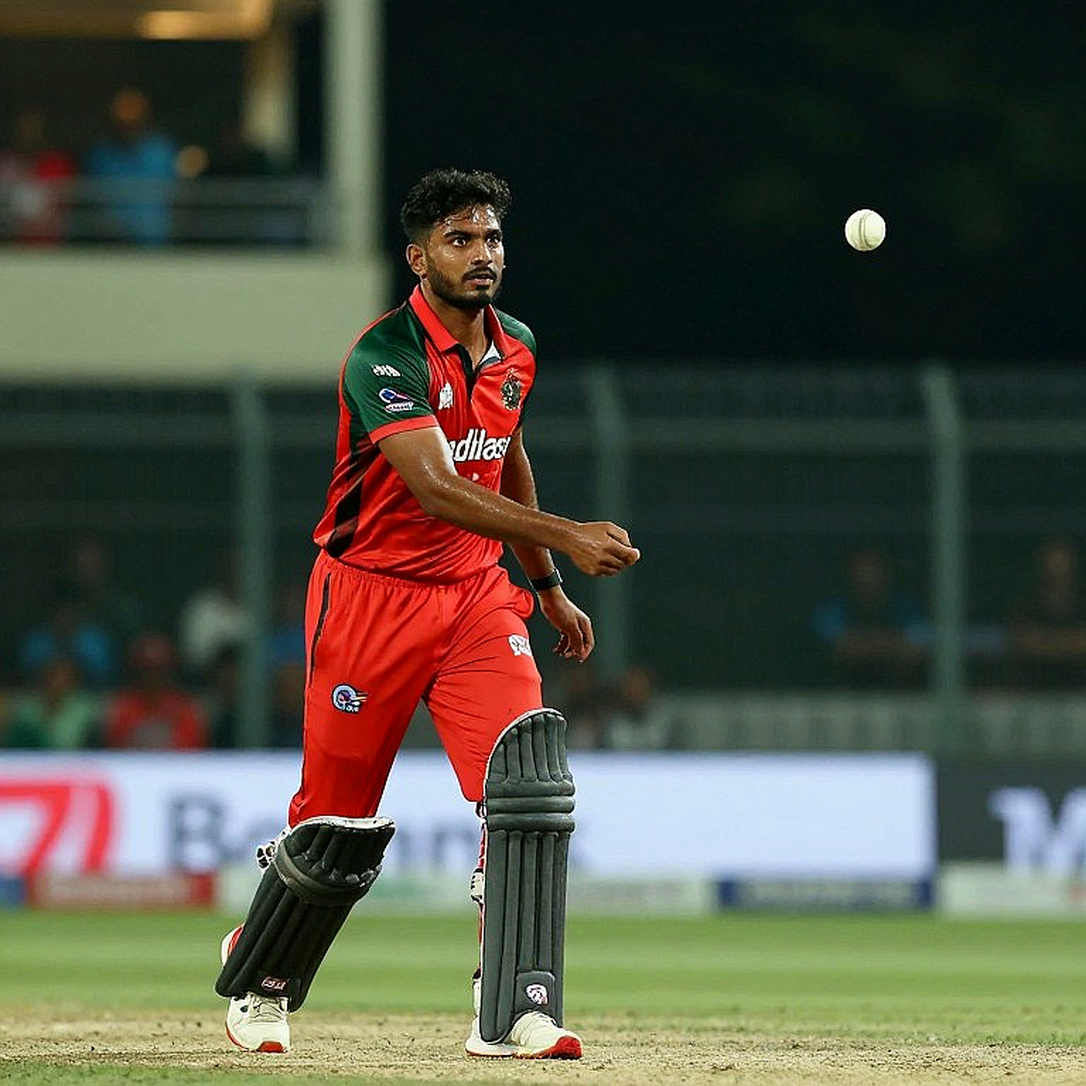
What stings most in the sequence is the total disappearance of control through the middle overs. When a spinner is landing the ball on the same spot and the batter has sweep, defence and the paddle available, four wickets in 22 balls means choices were made in a hurry. Roston Chase took three wickets in the space of ten deliveries. A bowler whose identity is primarily that of a batting all-rounder who bowls off-spin does not usually become lethal on day three of a low, slow turner by craft alone. That figure should be read as a favour from the surface, not as a star turn. Jomel Warrican, the left-arm orthodox spinner, also struck, and that is the real Mirpur story: here it is difficult to separate bowling greatness from surface assistance.
Tawhid Hridoy: second ball, first big shot — and a mountain of questions
Any analysis of this innings stops at one name: Tawhid Hridoy. This is only his second Test. After Mominul Haque's injury he was pushed to No. 4 — a slot in Test cricket normally occupied by a batter whose technique is settled and whose temperament is cool. Hridoy tried to open his account with a big shot on only the second delivery he faced and was out. That is a decision-making failure more than a technical one, and the distinction matters. A technical error is when a batter plays the wrong shot with the right intent. A decision-making error is when a batter cannot settle what his role in the innings actually is.
When you walk in at 35 for 5, your job is not to get off the mark; it is to hold the innings together. Leaving the first ball, defending the second, getting the front leg moving on the third — those small decisions are the real currency of Test batting. Hridoy traded them for one big shot. In the language of fans and media this is being called a "brain-fade", and that language carries anger. But anger needs context: a batter playing his second Test, pushed into a specialist position because someone else got injured, is failing at least partly because he should not have been in that position yet. That is a selection and development story as much as an individual lapse.
Tanzid Hasan: a third duck in ten innings — this is structure, not form
If Hridoy's shot is an event, Tanzid Hasan's record is a trend. A third duck in ten innings. When a top-order Test batter is returning without scoring in roughly thirty per cent of his innings, that is not a bad run; it is a structural problem. Both shot selection and thinking against the new ball are in question, and a surface like Mirpur amplifies the problem because the ball becomes unpredictable inside the first five overs. In those conditions an opener has one genuine weapon left — a clear plan and disciplined intent. Tanzid's numbers suggest one of the two keeps going missing.
Mominul's injury: one accident, three chain reactions
The single biggest event of the day is the blow to Mominul Haque's head while fielding. It should not be read as just an injury. It disturbed three things at once. First, the team lost a senior middle-order batter. Second, the middle order had to be rebuilt and Hridoy pushed to No. 4. Third, under the concussion-substitute rule, Jaker Ali was brought in — an ICC mechanism introduced in 2026 for player safety but which always raises a match-balance question. Whether a like-for-like replacement strengthens Bangladesh beyond what is fair will be watched closely. If Jaker Ali changes the momentum of this match, that change will be scrutinised.
There is a less noticed dimension attached: captaincy. Najmul Hossain Shanto is Bangladesh's Test captain and is among the batters dismissed in this collapse. When four wickets fall in a session and the captain is himself in the pavilion, the signal from the dressing room weakens. That is a structural comment rather than a criticism — on days like this at Mirpur, a senior batter standing at the crease is itself the biggest tactical intervention available.
Nayeem Hasan's philosophy: 'you have to keep the scoreboard ticking'
Nayeem Hasan offered the most interesting line of the day. A hero with the ball in the first innings, he is now the batting hope — and that is Bangladesh cricket's central irony. He said that keeping the scoreboard moving on this pitch is essential because it is the only way to put the bowler under pressure. That philosophy is not wrong. On a turning pitch, purely defensive batting eventually breaks because the bowler keeps getting the chance to hit the same target. But there is a thin line between that philosophy and Hridoy's shot — the line between aggression and recklessness. Nayeem's argument justifies the intent, not the method. Trying to hit over the top on the second ball during a collapse is not reasoned aggression; it is panic. That difference separates a Test cricketer from a talented batter.
Nayeem also admitted he did not know what was going through Hridoy's mind because he was getting ready to bat. That is a candid answer and, perhaps unintentionally, points to a larger problem: the absence of information between two players in the same dressing room. When the top order is falling apart, the lower order should know what is happening above so it can walk out mentally prepared. It sounds like a small thing, but in Test matches these small things are the measure of a side's mental preparation.
The Mirpur surface: where even defence is a hazard
The key to understanding this match is accepting that it is not taking place inside a 'strong team versus weak team' framework. It is 'both teams versus a deteriorating surface'. Three LBW dismissals and a clean bowled indicate that the ball is beating bat for pad and stump rather than finding the middle. When the ball sometimes turns and sometimes stays low, the batter's whole technical structure is in question — you cannot commit your weight forward and you cannot fully go back. On such a surface the idea of a 'strong position' becomes fragile for either side.
Bangladesh are 106 ahead, but the unbroken 26-run seventh-wicket stand says that the position is safe rather than commanding. Setting a match-winning target from 35 for 5 requires the lower order to add far more than the current lead. There is a number game here that is easier to see from outside the ropes — if the seventh-wicket stand reaches 60-70 runs, West Indies will face a genuine fourth-innings target. If it breaks early, the hosts fall back into the same arm-wrestle they were in on the morning of day three.
Three days of light, not rain — and a bigger question
There is one factor over which neither side has any control and which can redefine the whole result: bad light. Play was interrupted on a third consecutive day. This is not a one-off; it is a structural interruption. A Test match's biggest capital is time — 450 overs, five days, four innings. When sessions are repeatedly cut, the probability of a draw rises arithmetically no matter how far ahead a team is. For Bangladesh this is a double loss: it has the lead but the overs it needs to convert that lead into a result are being chipped away.
Meteorologically, three days of dense, gloomy skies imply heavy cloud and humidity, and such conditions aid both spin and reverse swing. So the weather is helping the bowlers alongside the pitch. But the same weather is also stopping the game. That is the paradox at the heart of this match — the very thing sharpening the bowlers is blocking the route to a result.
Squad structure: the question of depth
Reaching 35 for 5 at home is a clear message: Bangladesh's top-order batting depth is thin. That weakness becomes much more visible when the whole structure leans on spin and the line between batting and bowling personnel becomes narrow. Nayeem Hasan was the side's hero with the ball in the first innings and is now the side's batting hope — a single frame that shows both Bangladesh's strength and its limit. The player who was supposed to win the match with the ball is now being asked to save it with the bat.
West Indies' picture is the inverse, but it is not without problems. Their attack is also spin-based — Chase and Warrican — and both sides' fortunes depend on whose spin holds patience longer. Both teams sit in the lower half of the ICC Test rankings and are typically outside World Test Championship final contention. That does not make the contest less important; it means this series is an opportunity for both to prove the credibility of their batting, and Bangladesh is so far letting that opportunity slip.
The risk picture
The first and greatest risk is sporting: a recurrence of batting collapses. It happened once here, but the roots lie in three years of home results. The second is personnel: Mominul Haque's concussion has an unpredictable return-to-play timeline, and if he misses the rest of the series, the middle-order plan will need rebuilding again. The third is match balance: concussion substitutions always attract scrutiny, and if Jaker Ali's selection visibly strengthens Bangladesh, the debate will follow. The fourth is public opinion: the anger directed at a young Hridoy on social media and in commentary can create mental pressure on a batter who needs support, not mockery. The fifth is environmental: light interruptions that affect the outcome independently of player performance.
The overall risk rating is medium-high, driven by the sporting and personnel clusters — a home top-order collapse, an injury-forced reshuffle and three consecutive days of light interference. No commercial or integrity risks are registered in this match.
Narrative and expectation: anger versus context
The dominant narrative right now is that 'Bangladesh threw away a strong position'. At team level that narrative is data-supported. But when it is loaded onto Tawhid Hridoy individually, the analysis weakens, because his experience is two Tests and his position came via someone else's injury. That gap between expectation and readiness points to a bigger problem — we ask young players for a maturity that exceeds the responsibility they have been handed.
Nayeem's admission that 'we don't know what was in his mind' is emotionally powerful but analytically hollow, because it concedes that the dressing-room context is unknown. On the other hand, the convergent view from Reifer and Nayeem — that you must score on this pitch — complicates the blame narrative. The line between intelligent aggression and a reckless heave is thin but real, and Hridoy crossed it. That is the cleanest conclusion available.
Scenarios ahead
The best case is that the weather clears, the overs are bowled and a genuine result emerges as the surface deteriorates further — a real test of both sides' batting and bowling. The base case is that the lower order adds runs, Bangladesh sets a defendable target, and West Indies must be bowled out in a fourth innings that demands four or five wickets in a session from the spinners. The worst case is that the light interruptions continue and the Test slides into a draw — a loss for both teams, because a legitimate contest is still alive here.
For Bangladesh the real work begins this morning. The 26-run stand is a start, not a foundation. If it doubles, the match can turn. If it breaks within ten overs, tomorrow's question will not be how West Indies won but when Bangladesh will learn to stand on surfaces like this. And that is the real story of this Test — a storm of 22 balls, one shot by a young batter, one injury to a senior player, and a pitch that reminds every session that patience is the greatest talent in this game.