
Amir Jangoo's Unbeaten Century Keeps Bangladesh at Bay in Sylhet Test
West Indies' first-day score of 235 for four in Sylhet tells only part of the...
West Indies' first-day score of 235 for four in Sylhet tells only part of the story. The more revealing figure is 27 for three. Bangladesh had reduced the visitors to that position inside the opening hour, with Taskin Ahmed and Hasan Mahmud exploiting the new ball and putting the home side in a position to dictate the match. Instead, Amir Jangoo and debutant Kevin Wickham rebuilt the innings with a 131-run fourth-wicket partnership, transforming a precarious start into a strong platform.
Jangoo finished the day unbeaten on 111, while Justin Greaves was 35 not out. The century came off 149 deliveries, and West Indies reached 235 for four before bad light forced an early close. Reports indicate that only 70 overs were completed, with approximately 20 overs lost because of the conditions. The innings was a significant recovery, although the five-day nature of Test cricket means that one day's advantage cannot determine the eventual result.
West Indies entered the second and final Test with a 1-0 lead after winning the opening match in Dhaka by eight wickets. A victory in Sylhet would give the visitors a 2-0 series sweep. Jangoo's innings has made that possibility more realistic, but the scorecard also exposes a concern that the recovery should not conceal: West Indies' top order remains vulnerable to disciplined new-ball bowling.
The collapse that created the day's defining partnership
West Indies won the toss and elected to bat. The decision offered the visitors an opportunity to establish a substantial first-innings total, but the cloudy conditions and early movement made the opening period difficult. Taskin Ahmed bowled Brandon King for nine, bringing Bangladesh's first breakthrough. Hasan Mahmud followed by bowling Kavem Hodge for one. Taskin then trapped Joshua Da Silva leg-before for 12, leaving West Indies at 27 for three.
The early wickets reflected a coordinated bowling effort rather than a single isolated mistake. Taskin attacked the stumps and used the movement available with the new ball. Hasan maintained pressure from the other end and forced the batters to make decisions against deliveries that challenged their defensive technique.
Bangladesh could have made the position even more difficult for West Indies. There were missed opportunities in the slip cordon, including a chance involving Da Silva that Shadman Islam could not hold. Hasan also failed to complete a return catch offered by Jangoo. Such errors matter disproportionately in Test cricket because a batter who survives an early chance can settle into a long innings and force the bowling side to repeat its work.
The distinction between taking early wickets and sustaining pressure is central to understanding the day's play. Bangladesh achieved the first objective convincingly. Its challenge was to maintain the same level of threat after the ball became older and the batters adjusted to the conditions.
The 131-run stand changed the rhythm of the innings
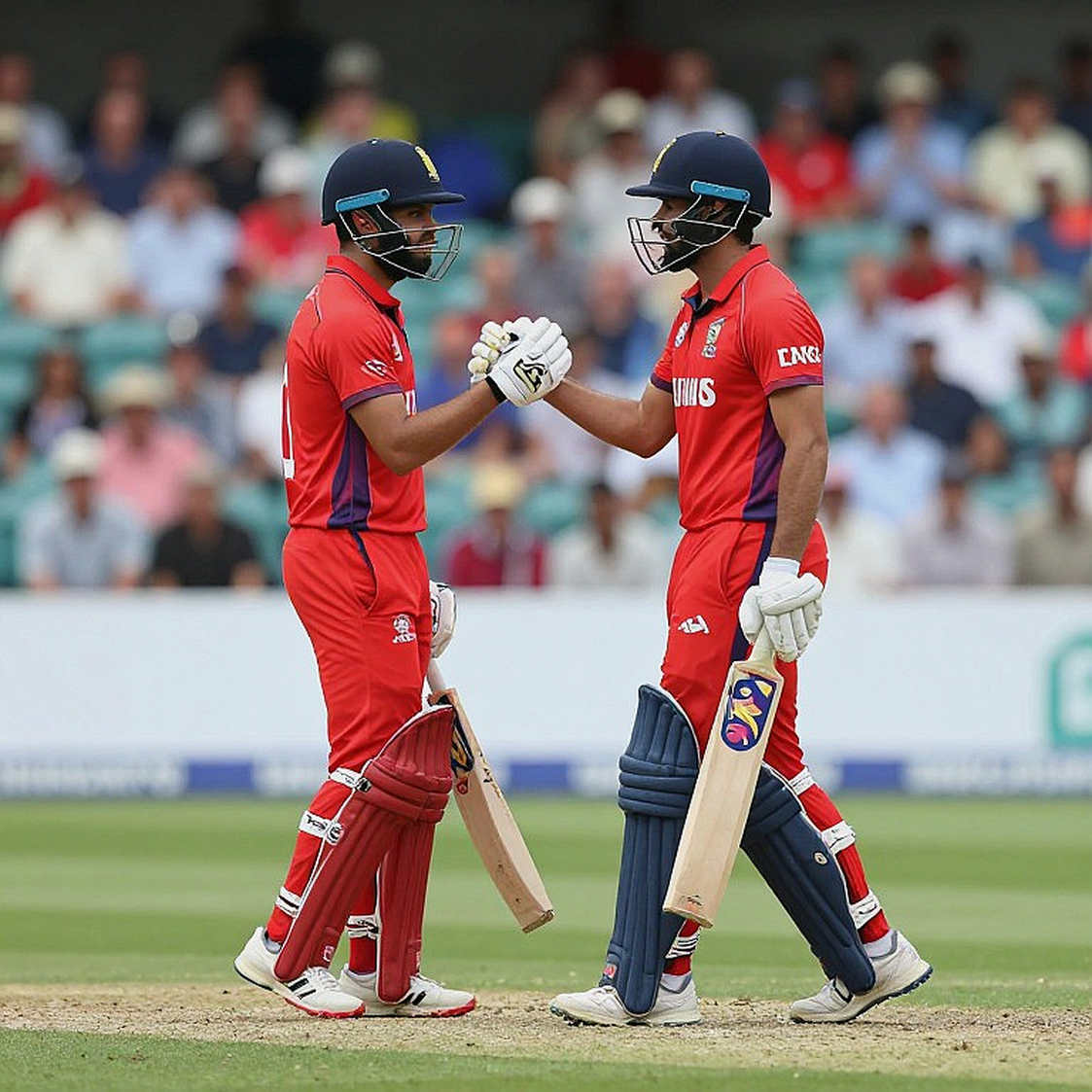
Jangoo and Kevin Wickham came together after the third wicket and added 131 runs for the fourth wicket. The partnership was the decisive passage of the day. Their methods were different, but the contrast worked in West Indies' favour.
Wickham was making his Test debut. A first innings in Test cricket presents a particular challenge: the batter must assess the pace of the surface, the movement of the ball and the quality of the attack without the benefit of previous experience at that level. Wickham began cautiously and gradually became more comfortable. He reached his maiden Test half-century after 123 deliveries according to the initial match analysis, although a separate detailed report records his innings as 61 from 145 balls. The official scorecard should take precedence when reconciling that discrepancy.
His approach allowed Jangoo to play with greater freedom at the other end. Wickham concentrated on survival and accumulation, while Jangoo looked for opportunities to score. In Test cricket, a partnership does not require both batters to operate at the same tempo. One can absorb pressure while the other disrupts the field and forces the captain to change plans.
That is what happened in Sylhet. The partnership frustrated Bangladesh's bowlers and changed the fielding requirements. As the stand grew, the home side had to consider whether to maintain attacking positions or protect the boundaries. The bowlers also had to vary their lengths rather than repeatedly attacking the same areas.
Hasan eventually ended the partnership by dismissing Wickham for 61. The method was particularly instructive. After testing the debutant with a sequence of short deliveries, Hasan changed his length and produced a good-length ball that breached the defence and hit the stumps. It was a well-constructed dismissal: the short-ball barrage had encouraged the batter to prepare for another delivery of that type, making the change in length more difficult to manage.
Wickham's debut deserves recognition, but one innings is too small a sample to establish his long-term Test potential. The next stages of his career will reveal how he responds to different conditions, particularly sustained pace, bounce and movement outside the subcontinent.
Jangoo's century was about control as much as scoring
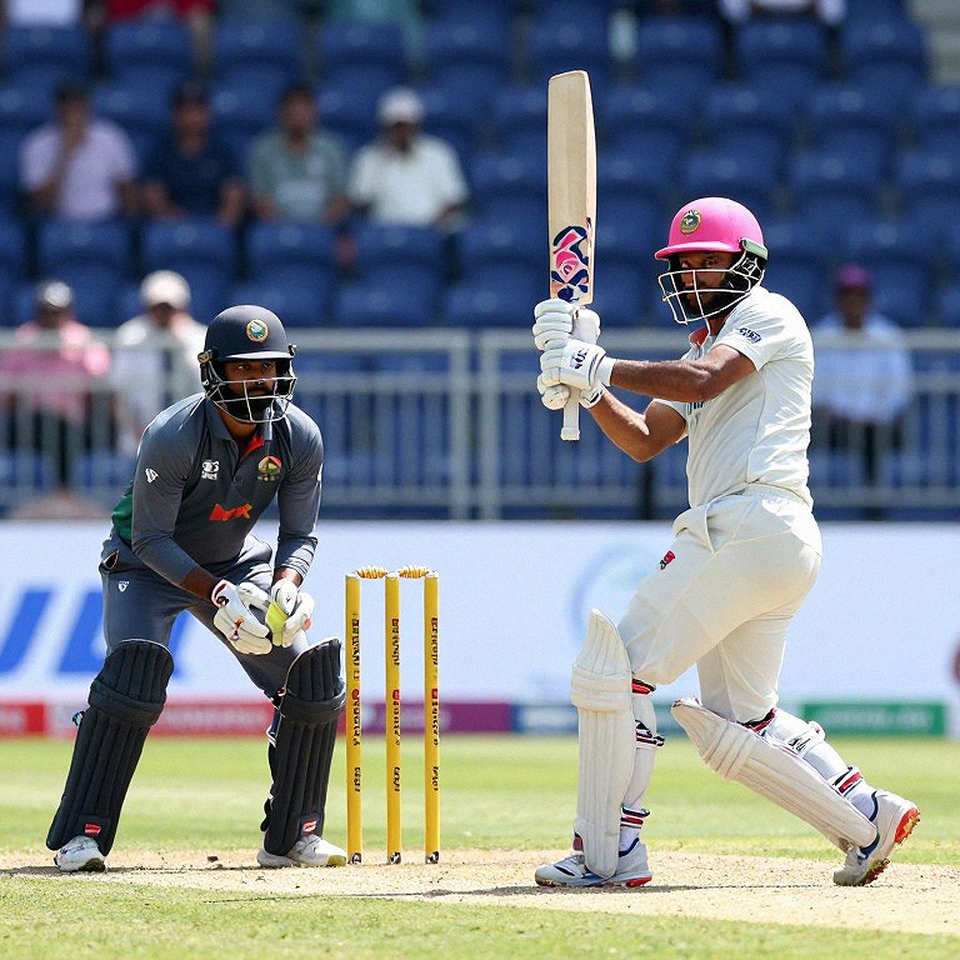
Jangoo's unbeaten 111 was the outstanding individual performance of the day. He completed his century from 149 balls, a brisk rate by conventional Test standards, particularly given that he entered the innings at 27 for three. The value of the innings, however, cannot be reduced to its scoring rate.
He first had to survive the period when Bangladesh's fast bowlers were finding movement with the new ball. Once he settled, he prevented the bowlers from repeatedly attacking the same areas. His fifty came from 86 balls, with a cut shot against Nayeem Hasan contributing to the milestone. He continued to score against spin and completed his century by hitting left-arm spinner Taijul Islam for six.
That shot was significant in the context of Bangladesh's home strategy. The hosts had selected a combination that included three spinners, reflecting the expected value of spin as the match progressed. Jangoo demonstrated that he was prepared to attack rather than simply defend. When a batter can score against spin, the captain must adjust the field, alter the length or change the bowling angle. Each adjustment creates another opportunity for the batter to find runs.
Jangoo's recent record provides additional context. During the recent tour of Sri Lanka, he converted his maiden Test century into a double century. His century in Sylhet now provides another substantial innings in Asian conditions. Together, those performances suggest that he is developing a strong understanding of subcontinental surfaces and spin bowling.
The caveat is important. Success in Sri Lanka and Bangladesh does not automatically establish that Jangoo will perform equally well in Australia, England or South Africa. Those tours will test his technique against different levels of pace, bounce and lateral movement. At this stage, the strongest conclusion is that he has demonstrated considerable ability in Asian conditions. A broader claim about his standing among the world's leading Test batters would require more evidence.
In my years of watching Test cricket, the most useful way to evaluate a major innings has been to consider the circumstances in which it was played. The entry score, the number of wickets lost, the quality of the attack and the number of deliveries faced all matter. Jangoo's innings scores highly across those measures because he took responsibility when his side was in immediate danger and remained unbeaten at the close.
Greaves supported him with an unbeaten 35, and their unbroken fifth-wicket stand was worth 77 at stumps. West Indies now have an opportunity to push towards 300, 350 and potentially beyond. The next morning will determine whether that opportunity becomes a substantial first-innings advantage.
Bangladesh's seam success and the unanswered question about spin
Bangladesh's four wickets all came through its fast bowlers. Taskin and Hasan claimed two apiece, while Taijul Islam and Nayeem Hasan remained wicketless on the opening day. That distribution is notable because spin traditionally forms a central part of Bangladesh's home Test strategy.
A slow surface can become increasingly helpful to spinners as a Test progresses. The first day, however, may offer a different balance, particularly when the new ball provides assistance to seamers. It would therefore be premature to describe the first day's wicketless spin performance as proof of a long-term decline. The conditions can change, and the second and third days may provide a different examination.
Even with that qualification, Bangladesh will be concerned that the spinners were unable to break the Jangoo-Wickham partnership. Jangoo's willingness to attack Taijul and score against Nayeem prevented the home side from using spin as a reliable containment option.
The fielding errors add to the problem. Slip catching is part of the bowling plan, not a separate activity. A bowler creates an opportunity by forcing an edge; the fielder must complete the work. When that chance is missed, the batter receives another opportunity to settle and the bowler must build pressure again.
Bangladesh's fast bowlers showed that the West Indies top order could be exposed. The home side's task is to turn that early success into a sustained attack. That requires the spinners to become more threatening, the fielders to take their chances and the captain to manage the changing conditions effectively.
West Indies have recovered, but their top-order problem remains
The score of 235 for four should not hide the weakness exposed by the first hour. West Indies lost three wickets for 27 runs against a disciplined pace attack. Jangoo and Wickham rescued the innings, but the recovery does not mean that the top order has become reliable.
A team cannot build a dependable Test batting strategy around repeated rescue performances. The top order must provide enough stability for the middle order to construct large totals. If the first three or four batters continue to fall cheaply, the team will repeatedly ask its middle order to repair difficult situations.
Johan Campbell missed the match because of viral fever, and Da Silva came into the side. That was an illness-related selection change and should not be treated as evidence of a broader selection overhaul. Wickham's debut was an encouraging development, but his retention and future role will depend on further performances.
The next innings will offer a better indication of whether the West Indies top order can correct the problems exposed by Taskin and Hasan. For now, the middle order has supplied the runs, but the structural question remains unresolved.
Bad light has increased the importance of time management
The early close caused by bad light is another significant factor. Reports indicate that approximately 20 overs were lost, with only 70 overs completed. In a five-day Test, lost time can affect the possibility of a result because both sides need enough overs to complete their innings and create a realistic opportunity to take 20 wickets.
West Indies are already 1-0 ahead, so a win in Sylhet would complete a 2-0 series sweep. A draw would deny them that sweep, although it would leave them with the series lead. The loss of overs does not make a draw inevitable, but it reduces the available time and may influence decisions about batting tempo and declarations later in the match.
There is also a technical detail relevant to the second morning. Under standard Test playing conditions, the fielding side may take a second new ball after 80 overs. Since only 70 overs were completed on the first day, Bangladesh will initially have an opportunity to use the existing ball for approximately 10 more overs before the second new ball becomes available. That makes the opening passage of the second day particularly important.
If Bangladesh removes Jangoo and Greaves early, it can put pressure on the lower order and restrict the total. If the partnership survives the remaining period with the older ball and the new ball, West Indies could move towards a substantial score.
The wider significance of the series
West Indies' eight-wicket victory in Dhaka and their recovery from 27 for three in Sylhet provide encouraging evidence that the team is becoming more competitive in Asian Test conditions. However, two matches are too small a sample to establish a lasting change in the team's away record.
Jangoo is the clearest individual positive. His double century in Sri Lanka and unbeaten century in Sylhet suggest a batter capable of handling spin and constructing long innings in the subcontinent. Wickham's debut contribution is another encouraging signal for the West Indies talent pipeline, but the sample remains limited.
Bangladesh, meanwhile, must examine why its early seam success did not translate into sustained control. The wicketless spin performance and missed slip chances were costly, although the match remains at an early stage. A stronger performance on the second morning could change the balance quickly.
I learned a lasting lesson from India's 36 all out in Adelaide in December 2026. An immediate verdict can be persuasive and still be wrong when the larger Test match has not unfolded. India subsequently won that series 2-1. The lesson is relevant in Sylhet: Jangoo's century is a major achievement, but it does not establish that Bangladesh's entire bowling strategy has failed or that West Indies have solved every batting problem.
Three conclusions can coexist. Jangoo produced an outstanding rescue innings. Bangladesh's fast bowlers were excellent in the opening phase. West Indies' top-order vulnerability remains a concern. Any analysis that ignores one of these facts will misrepresent the day.
The second morning will provide the next decisive test
West Indies hold a narrow advantage after reaching 235 for four. Jangoo remains unbeaten on 111, Greaves is 35 not out, and their partnership has already added 77. The visitors have the opportunity to build a substantial first-innings total, but Bangladesh still have a clear route back into the match.
Taskin and Hasan need to recreate their early pressure. The spinners must find a way to challenge the settled batters, and the slip fielders must convert the opportunities that come their way. West Indies, meanwhile, need to ensure that the lower order contributes and that the top-order collapse does not become a recurring feature of the series.
For Jangoo, the next challenge is to turn his century into an even larger innings. A hundred is an important milestone; converting it into a double century requires another period of concentration, patience and tactical adjustment. If he succeeds, the innings could become one of the defining performances of his early Test career.
It is too early to declare that West Indies have neutralised Bangladesh's home advantage. It is equally difficult to dismiss the significance of their recovery. Will Bangladesh use the first 10 overs on the second morning to regain control, or will Jangoo and Greaves extend the partnership and push the visitors towards 350? That is the question that will shape the next chapter of the Sylhet Test.